 This is a wonderful vintage 1930’s German Steiff large 14″ Terrier dog. Margarete Steiff (July 24, 1847 – May 9, 1909), was a seamstress who in 1880 founded Margarete Steiff GmbH, making toy stuffed animals. Born in Giengen, Germany she used a wheelchair, due to polio she contracted as a baby. She started making stuffed animals as a hobby. These toys began as elephants, which were originally a design Steiff found in a magazine and originally sold as pincushions to her friends. However, children began playing with them, and in the years following she went on to design many other successful animal-themed toys for children. She designed and made most of the prototypes herself.
Author Archives: davidaantiques
1901 WOLLENSAK ANSCO MODEL A CYKO CAMERA

VINTAGE WOLLENSAK ANSCO MODEL A CYKO AUTOMATIC CAMERA
This is a wonderful vintage large Wollensak Ansco Model A Automatic camera. The company was founded in 1842 (pre-dating Kodak in the photography business) as E. Anthony & Co. (later E. and H.T. Anthony & Company, when Edward Anthony’s brother officially joined the business) and became the Anthony & Scovill Co. in 1901, after a merger with the Camera business of Scovill Manufacturing (Connecticut). That year the company headquarters relocated to Binghamton New York. This was already a site of one of Ansco’s manufacturing facilities
1900 ORIGINAL ART BRONZE JUAN CLARA GIRL ON CHAIR FEATHER KITTENS
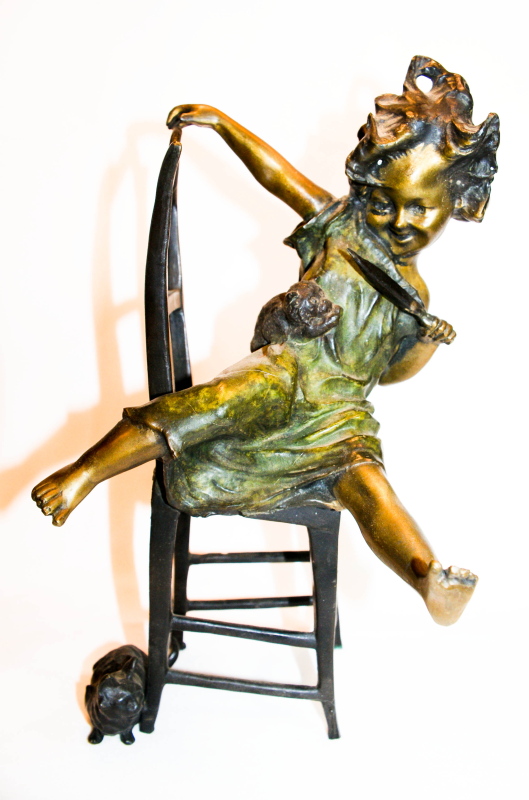
This is a wonderful vintage original art bronze signed Juan Clara. It is a very detailed fun darling art bronze. She measures 12″ solid bronze. Juan Clara (SPANISH, 1875-1958) artist was inspired by chairs in his work. This piece is a hard one to find.
VICTORIAN FINE JEWELRY RUBY 10KT GOLD RING
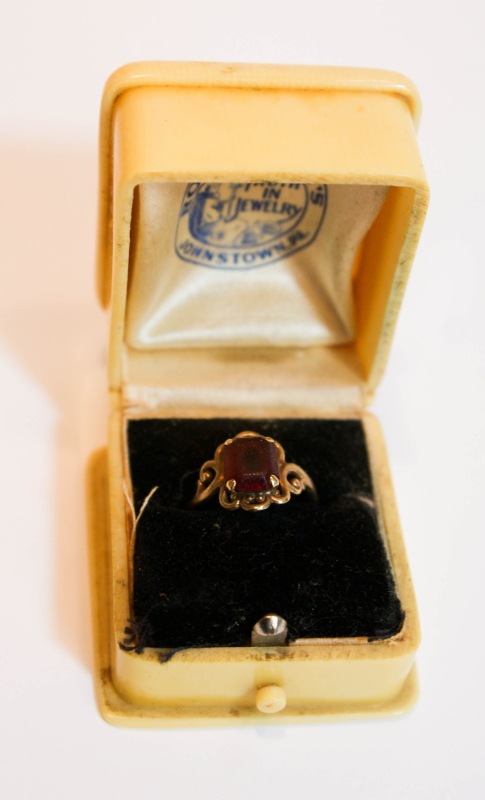 1900 Victorian 10kt gold ruby ring with original celluloid box. Victorian era jewelry was elegant and romancing with lots of emotion. The elegance of royalty was the design of emulation of the Queens and wealthy. There was very fine jewelry and mid-level costume. All was hand crafted and was art form at its best.
1800’s BLACK AMERICANA GERMAN HUMIDOR JAR

This is a wonderful vintage 1800’s porcelain tobacco humidor jar made in Germany. It is early Black Americana. Most collectible black memorabilia was produced from the early 1900s through the 1950s, although some collectors seek items dating back to the Civil War era as well. Many of Black memorabilia is collected for many different reasons and by people of all races and nationalities. Not all collections have a negative connotation nor are they amassed due to bigotry. Many uplifting aspects of African-American culture can be incorporated into a collection.
VINTAGE 1950’S ORIGINAL MID-CENTURY PAUL EVANS BRONZE ART
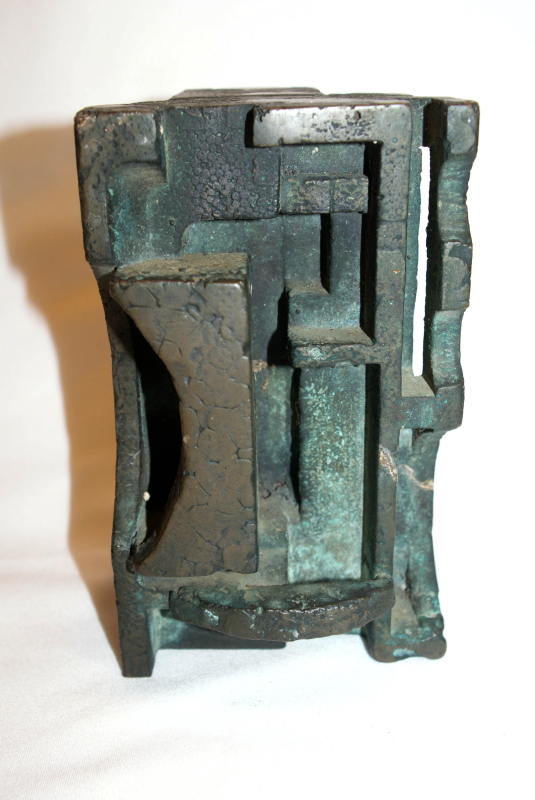
This is a wonderful vintage 1950’s bronze original art from Paul Evans. It is unsigned, I could not find initials or signature. This came from estate of person who had known Paul in PA in late 1950’s early 1960’s and was a gift. It is a super nice piece, It measures almost 7″ weighs over 25lbs solid bronze. An American born furniture designer, sculptor and artist, , who is famous for his contributions to American furniture design and the American Craft Movement of the 1970s, and with his work with the influential American manufacturer Directional Furniture. His creation of metal sculpted furniture set him apart.
1900 CASIGE GERMAN TOY SEWING MACHINE
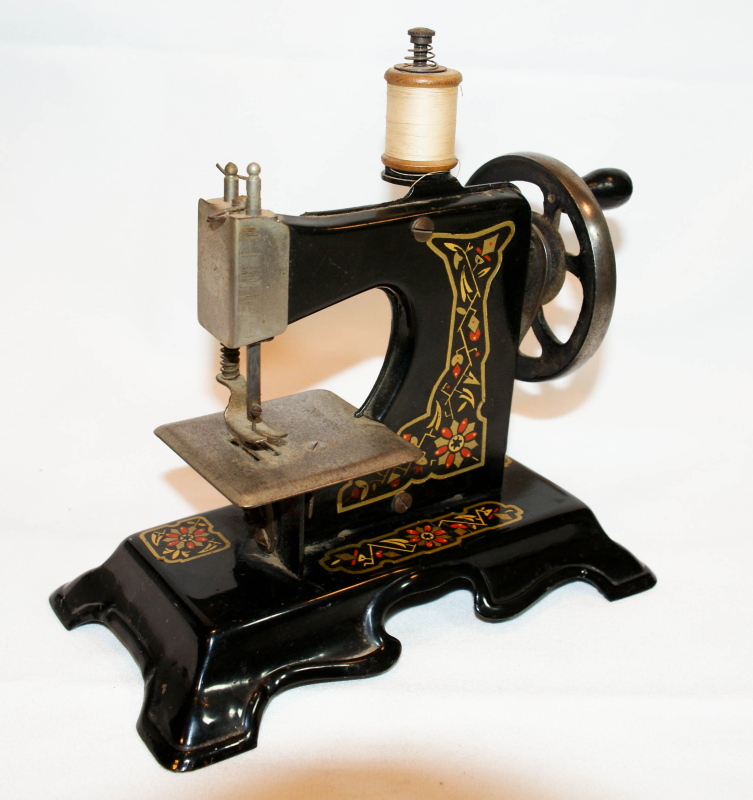
Casige was one of the great German toy makers of the 20th century although the original company had been founded some 50 years earlier. Specializing in piano locks. This is a wonderful shape looks like hardley used, works great
1910 GOLD GILLETTE RAZOR SHAVING KIT
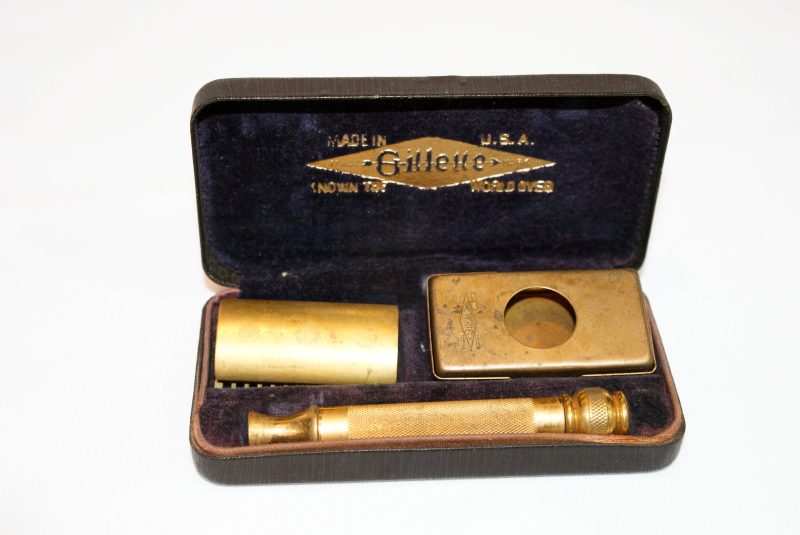
Need a Shave
This is a wonderful vintage 1904 gold Gillette razor shaving compact kit. The first safety razor using the new disposable blade went on sale in 1903. Gillette maintained a limited range of models of this new type razor until 1934 . This is one of their first models! The quest for a better way to remove facial hair or to shave has taken many twists and turns over the centuries. The years between 1800 and 1900 have been coined the “Golden Era” of the straight edge razor. Men went to barbers to have their mustaches and beards carefully trimmed. Interchangeable blade-razor sets and “seven-day” sets were popular in the 1800s.
1920’s STERLING BAKE ENAMEL JEWELRY BUTTERFLY PIN
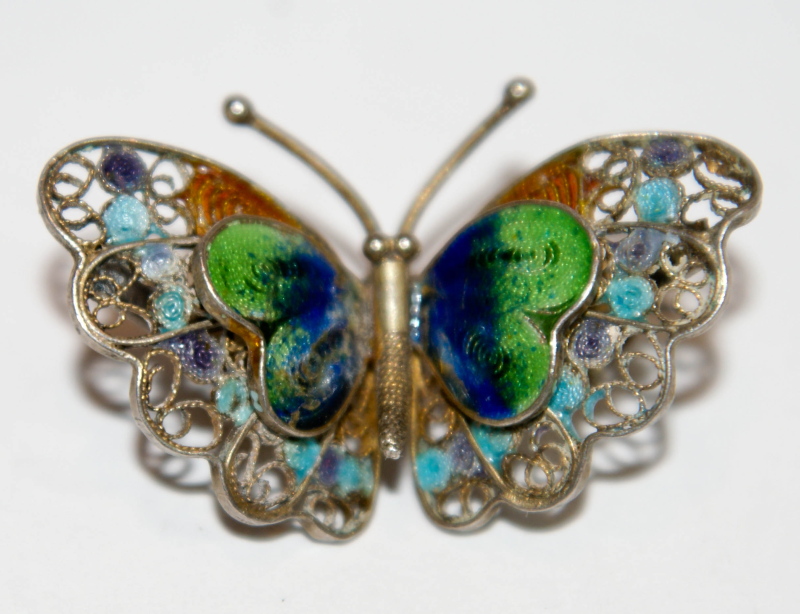
This is a wonderful vintage sterling baked enamel butterfly pin from 1920’s. butterflies and insects were and still are to present day a magical whimsical fashion statement. Happiness! With a touch of elegance. There was a period of time ladies wore real butterflies in their hair alive attached to a string.
1960 IDEAL WIND-UP TOY ROBOT MR MACHINE
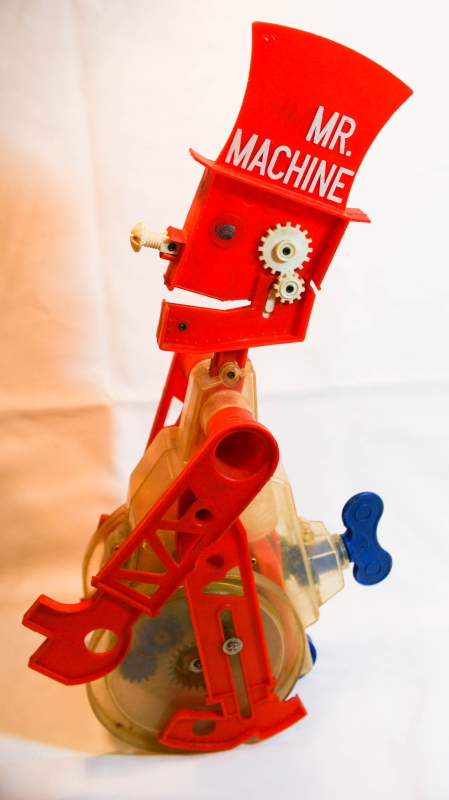 One of my favorite toys! 1960 Ideal Toy the Mr. Machine. I played hours with this big guy. Mr. Machine was a robot-like mechanical man wearing a top hat. His body has a giant windup key at the back. When the toy is wound up it walks, swinging its arms and repeatedly ringing a bell mounted on its front; and after every few steps emit a mechanical “Ah!”, as if it were speaking. The toy stood about 18 inches tall (roughly 46 cm). The gimmick of Mr. Machine was that one could not only see all of his mechanical “innards” through his clear plastic body, but one could also take the toy apart and put it back together, over and over, like a Lego toy or a jigsaw puzzle.
 David A's Estate Antiques & Services